
Hi Again, Atheists
Developing the Kuzari Argument

I’ve actually been super busy. But Yosef Hirsh retired so I now have less reading and commenting to do which gives me a few extra minutes to quickly publish this post, so here you have it;)
Actually, Yehuda Mishenichnas of Let's Be Real reached out to me a while ago, right before I got all busy (he probably thought I was ghosting him), and wanted to discuss (read: convince me out of) my position as a religious Jew. He then proceeded to write two really long posts responding to some old posts of mine - anyone can take a look (ten points whoever gets through them). I think the plan was that I read them and we discuss and then he publish but y’know, sorry, Substack is not my top priority in life - it even comes after my hobbies - and he, understandably, didn’t want to wait, so he posted.
Just a word about Mishenichnas, it happens to be, for all his debating flaws, I have to give credit where credit is due. He is one of the only atheists I know that actually wants a real discussion and nothing else. I even think he really is more interested in the truth than many other atheists out here who are merely trying to rationalize their lifestyle. Also, his fault (crazy long posts and comments for example) comes from his passion, and I guess I kind of respect that.
But anyway, I would love to take his article apart, piece by piece, and respond to many of the points - a lot of is actually a matter of framing and yes, hyperbole1 - and I will hopefully get to that down the line. (I wouldn’t do it as a line by line response, but I would pick out some of the points and write a post about them.) But the main objection behind all the smoke in that article is that according to Mishenichnas, we Jews just have no proof. The first thing an atheist wants is proof. A framework for why we believe in this old book and its fairy tales. So let’s begin there.

The Kuzari argument posits that since millions of people claimed to have experienced Hashem, that is historical evidence of the Torah’s truth. It’s an unprecedented claim, and it’s not the kind of story that’s easy to dismiss as pure invention without offering an explanation.
I’ll add that this narrative went on to shape the three largest religions in the world, and that the book given at this revelation has become the most influential and widely read text in human history (Harry Potter aside;). If the Torah is true, this is not a bad explanation at all. Of course, this alone is not enough to establish anything other than that it “hit the spot” but I do think it’s worth mentioning, so long as the reader (meaning YM) doesn’t focus on it extensively.
The standard rebuttal to the Kuzari argument is that the story is embellished. There are many versions of this rebuttal, but the basic idea goes like this: Something did happen. There was likely a group of people, possibly descendants of Avraham, who were enslaved in Egypt and later escaped. The severity of the bondage and the drama of the escape will vary depending on the imagination of the theorist, but most probably there were real and significant events involved.
Maybe the group was small, perhaps a thousand people - which is a big deal, no doubt - just not six hundred thousand. These people may have wandered into and through the desert, eventually made it to Canaan, and eventually - this is where it stops being conjecture - these people grew into an empire as we know, culminating with the Davidic dynasty.
As an added bonus, this smaller version fits neatly with the archeological footprint that was(n’t) left.
According to this view, the story slowly grew. The story of “slavery in Egypt” became “the worst slavery imaginable”; the “escape” - now called an exodus, or the Exodus -became “the most miraculous escape in history”; the journey through the desert was the craziest ever; the tales of the downfall of enemies were beyond spectacular.
And since their worldview was thoroughly theistic, everything was naturally attributed to God. God actually planned the Exodus from the beginning, foretelling it to Abraham. God took them out with a strong hand. God guided the (otherwise messy and unplanned) journey and it was painted retroactively into a divinely destined march toward what now became “The Promised Land.”
Anyone can fill in their own details, and thus was born the amazing story of the Exodus.
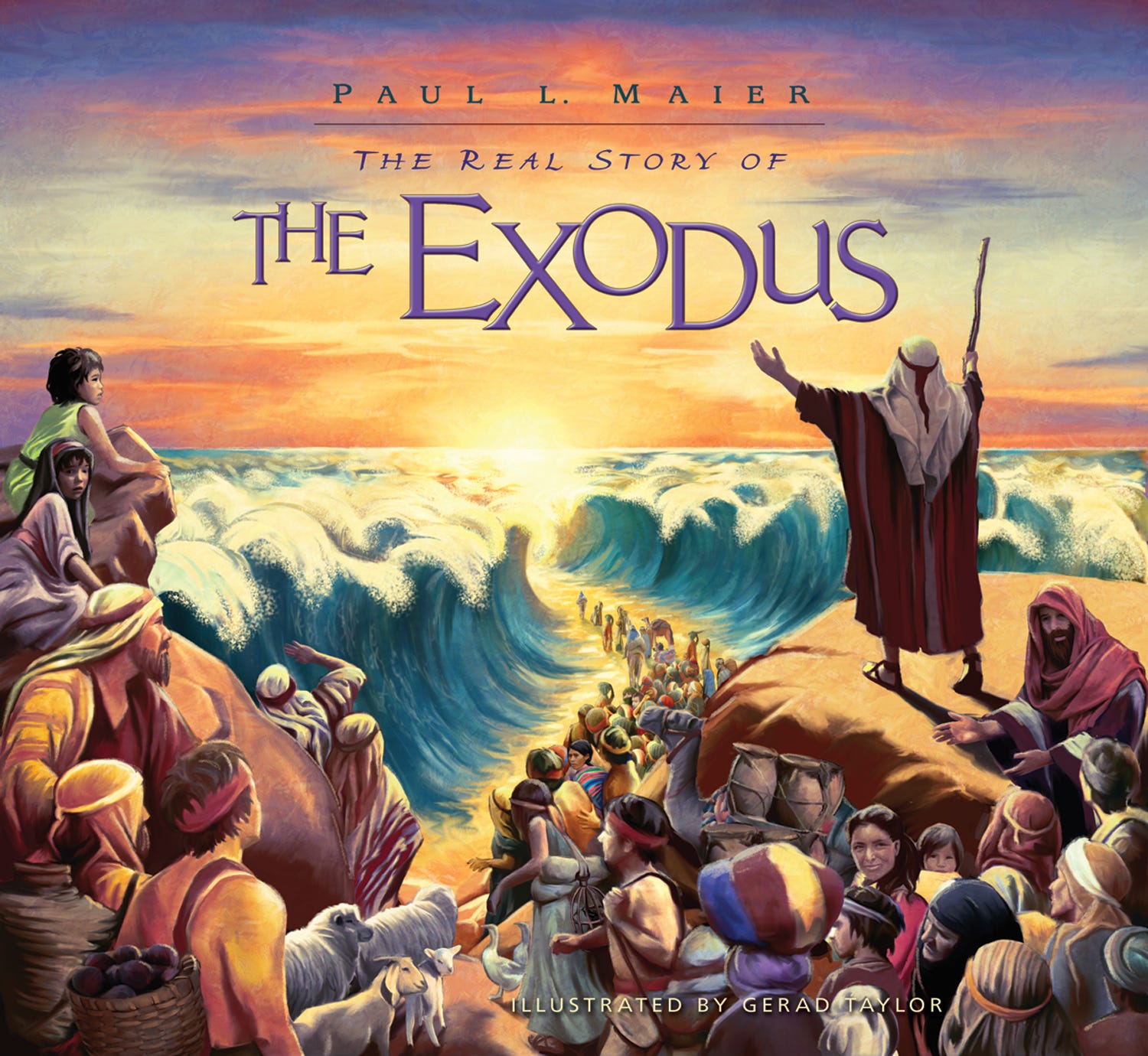
The obvious observation I want to focus on - and I apologize if this is boring to you (“truth doesn’t care about being boring” - shulman) - is that this is all theory and conjecture. The alternative, that the Torah’s account is substantially true and not embellished, is an alternative theory.
So now, how do we go about deciding which version is more reasonable?
Before even answering that, the believer and the atheist tend to diverge here about which is more reasonable, and that is kind of what I want to carefully pay attention to.
The believer will point out that “embellished history” is exactly how conspiracy theories operate. No one is denying that a holocaust happened, just maybe not the holocaust. 300k is a lot and is definitely a genocide, but it’s not six million. What happened to the narrative, claim the holocaust deniers, is embellishment.
Here too, believers argue, we have a strong historical tradition, and historical claims are a valid way of approaching truth. Every historical narrative is subject to be challenged with revisionist theories, but the ability to ask questions doesn’t mean that questioning it is the best path to truth.
The atheist response is that there is a big difference between the two narratives, and not just because of distance of time and age. Age alone doesn’t play a major role in evaluating historical truth (it just allows deniers easier access). We can question the Holocaust which happened recently, and accept the existence of Aristotle which happened eons ago without logical contradiction.
The issue lies in a more meta understanding of why we ever assume the facts of historical narratives to be true over their conspirator counterparts.
I’ll give credit where credit is due, I heard this years ago from Neil DeGrasse Tyson (not the biggest fan, but I did my time and thought he was very helpful explaining some really cool stuff).
(Sorry I didn’t actually watch the video just now, but this is probably the one from.)
He was asked specifically about what he would respond to those who say the moon landing was staged in Hollywood, and he explained that in order to assume it was staged, so much has to be put into the story, including so many people having to be in on it, that it’s just a simpler version of the truth to assume that the moon landing in fact did happen.
And here is where the atheist pulls ahead. Because in the case of the Torah, unlike the moon landing, the things needed to accept if we assume it is true actually seem to be more incredulous than the alternative. An embellished history is one possibility which requires a strange version of history (which they try to placate by hand-waiving the ancients as a bunch of mystic weirdos), but it allows us to not need to accept that the Nile turned into actual blood, or that the sea split magically, or any of the fascinating stories of the Torah. However, if we accept the straightforward version, that things happened as history claims, then we need to accept all of these stories, which leads us to believing in some extraordinary (literally) stories, and the argument seems to rest that the atheist version is the better of the two.
Checkmate.

…except white comes back and counters.
(Sorry, my son has been wanting a chess-mate recently so yah, that’s now in my life. Lol. It’s actually really fun and interesting and I can’t believe I didn’t play as a kid! So up my alley!)
And this, to me, is the root of the entire debate: How unbelievable is the Torah’s story, really? And how unbelievable is the atheist’s account of reality?
It turns into a game of tallies. Which side has more points, which questions are left answered or unanswered, and how strong those questions are.
The atheist gathers points by rejecting what sounds like a fairytale version of history. But he also loses some points by admitting that he has no idea why anything exists at all (which, despite the atheist’s clever-sounding retorts, are only questions on the atheist - a discussion for another time). The atheist won’t even count that “why” as a point in his constructed worldview, while the believer sees it as pretty valuable. Alternatively, the part that bothers the atheist so much - the need to accept a world of miracles and prophets - is simply not bothersome to the believer. After all, if God exists, then revelations for those who are worthy isn’t even such a strange suggestion.
At that point, the discussion almost collapses into just frustration of “why don’t you get it???” and “what are you not getting???” The atheist genuinely cannot understand the believer. The believer genuinely cannot understand the atheist.

It’s not a difference of facts or even feelings. It’s mostly a difference of premises and worldviews, each one coherent in its own bubble. (And each will claim the other side’s story is incoherent and that they just don’t get it.)
Honestly, as an objective observer - a rarity - I see this as close to a 50/50. The Torah narrative could be fabricated, which would resolve a whole lot of questions, from science, from “rationality,” and all the others (morals, suffering, exclusivity claims, reliability of texts, and so on); it could also be that the Torah’s account is true, and only appear irrational because we live in a world so disconnected from spirituality that spiritual manipulations, revelation, miracles etc., feel implausible - more because of our own shortcomings.
If not for the mesorah I’m fortunate to have, which comes along with an inkling of appreciation for what spiritual greatness looks like, I actually might not lean either way, if I’m being honest. I think the argument from why anything exists at all is really strong, but at the same time, to believe that the Nile river turned into blood for a week is also a really strange belief.
As I’m sure people know, there was a point in time when I would’ve considered myself an agnostic. I never actually tipped the other way, but things were really heavily leaning in that direction - and coming from being a total believer, it was a matter of one more thing in favor of atheism that would’ve tipped the scales easily.
What has me oscillating, and ultimately favoring Judaism over atheism, ends up being the reasonability factor.
In the next two posts, iyH, I’m going to make a small detour and share a fascinating conversation I had with a bright young woman about “spirituality” in general (the second post being the main one) - I think there a lot of points that were made which will help define terms and what people mean so we can work with that moving forward. And then we’ll hopefully circle back and push this discussion further.
But to summarize what we have until here, in short, my argument is this: the truth of Judaism is contingent on the Kuzari argument, but the Kuzari argument itself only stands if it is the reasonable version. Thus, IMO, most of the work really should be on the reasonability of Judaism. But once it is reasonable, it becomes iron clad because of the Kuzari argument.
This matters because I don’t need to prove Judaism, I just need to to make it a reasonable option and allow the Kuzari argument to do the rest of the work.
More to come, God willing.
Consider this poignant paragraph: “The invitation to religious readers is this: can you articulate, calmly and without defensiveness, why your tradition’s extraordinary claims deserve exemption from the evidentiary standards you apply to others? If the cases truly are parallel, acknowledging this will feel like defeat. But in the interest of a more honest, consistent search for truth, one should identify with what’s true, not comfortable. Unless one’s goal is comfort, and that’s fine. But let’s be honest and acknowledge that Orthodoxy Judaism’s mantra is one of truth, not comfort.”
Just gonna drop this here:
https://open.substack.com/pub/daastorah/p/how-to-possibly-fix-the-kuzari?utm_source=share&utm_medium=android&r=33pit
I think we agree.
Wow! By the time I was able to admit to myself that the truth of the Torah was 50/50, I was three quarters of the way to being an atheist. Not sure what type of atheists you have come across, but believe me when I say in my case my life would be a lot easier if I were a believer. In most ways I behave as if I am a believer. Btw I read Yehuda’s entire essay. From what I can tell it boils down to “extraordinary claims require extraordinary evidence”, which the Kuzari does not provide imo. Combined with the idea that there are other religions/beliefs that provide evidence commensurate with or better than Kuzari, yet the Orthodox Jew will (rightly) consider them absurd. I do think Yehuda tries too hard to convince believers. It’s not just that it’s a bracha livatala. It’s that for the majority of believers, imo, their life will overall become worse if they realize the truth. For, the truth hurts. A lot. And I’m really not sure that NOT believing is better for the individual or for the world in general. I do admire Yehuda a lot though, I think he is quite brilliant and he has humility on top of that.